
Loading...
Serving West Fargo, ND and surrounding areas. (701) 960-1468
Cracked, tilted, or crumbling steps are a safety problem every winter. We build replacement steps anchored below West Fargo's frost line so they stay level and grip-safe for decades.
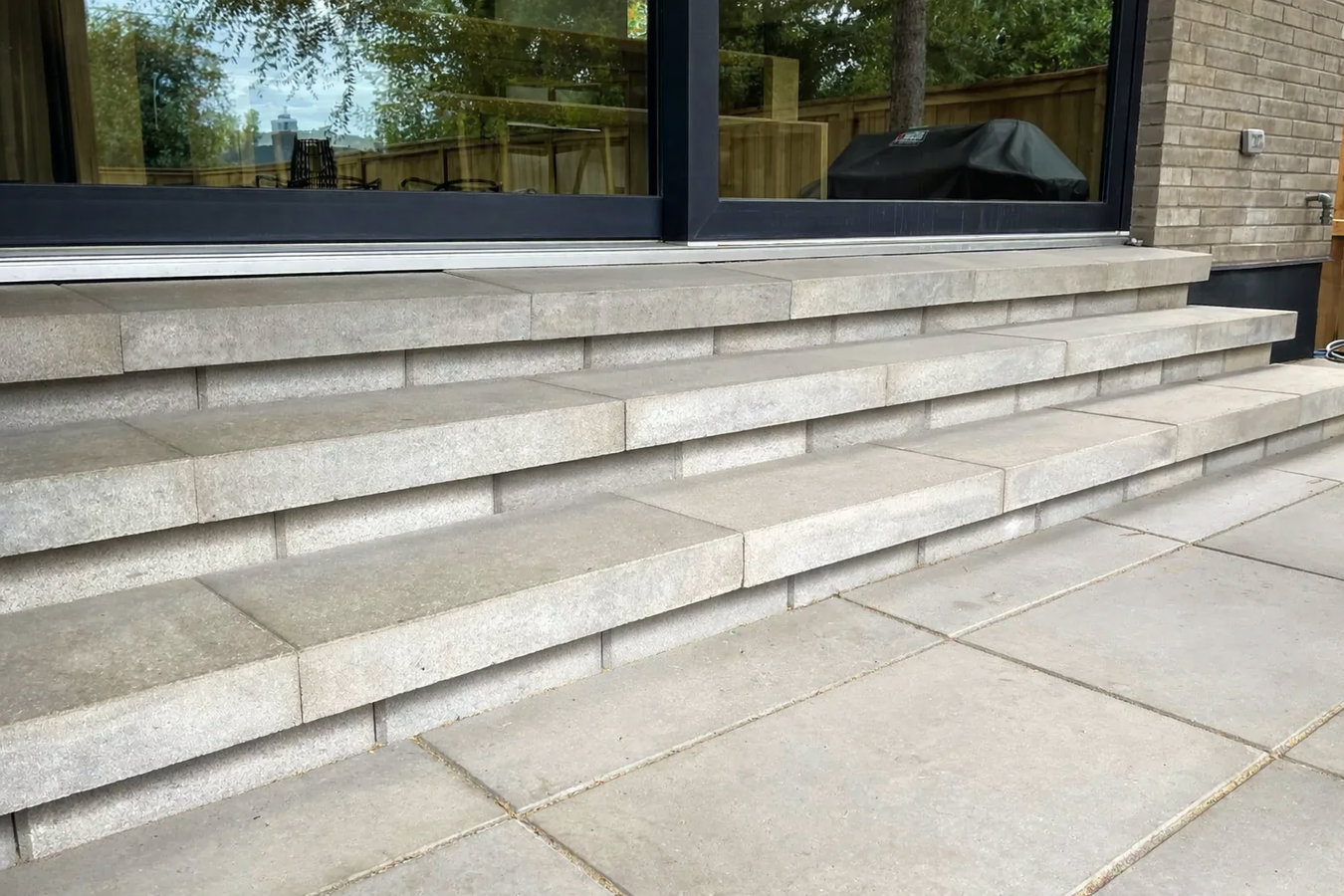
Concrete steps construction in West Fargo means building footings below the 42-to-48-inch frost line, using a freeze-thaw resistant mix, and finishing the surface with a texture that grips in icy conditions. Most standard entry step projects take one to two active work days, with a seven-day wait before normal foot traffic.
Steps are one of the most-used surfaces on any home, and they take the brunt of everything West Fargo winters deliver. If your steps are cracked, tilted, or pulling away from the foundation, that is not a cosmetic issue - it is a safety problem that gets worse each spring thaw. Many homeowners who call us about steps are also considering concrete retaining walls for the same front or rear entry area, which we can assess and quote at the same site visit.
A lot of homes in West Fargo were built in the 1990s and 2000s. Steps on those homes are now 15 to 30 years old - old enough to have absorbed many hard winters. If yours were original to the build, this is a reasonable time to have them looked at.
If cracks run all the way across a step - especially ones where a coin can slip in - water is getting inside and freezing. In West Fargo's climate, this cycle makes cracks wider every winter. Once the concrete is cracked all the way through, patching is a short-term fix at best.
Steps that no longer sit flush against your foundation, or where one side is higher than the other, have a base that has moved. West Fargo's clay soils expand and contract with moisture and temperature, which pushes sections up and down over years. A tilted step is a tripping hazard, especially when covered with snow or ice.
When the top layer of concrete starts peeling off in chips or develops a rough pitted texture, the surface has been worn down by years of freeze-thaw cycles. This is called spalling, and it tends to spread. A roughened surface is harder to keep clean and becomes slippery with snow or ice.
If your steps flex or make a hollow sound when you step on them, the fill material below has eroded or washed away - especially common after a wet Red River Valley spring. Steps that feel unstable are a safety risk that should be evaluated by a contractor before another winter.
We build concrete steps from the ground up - starting with a footing anchored below the frost line, a properly compacted base, and a wooden form that determines the exact height, depth, and width of each step. The finish on the tread is just as important as the structure underneath. A broom finish is the standard choice: a stiff brush dragged across the wet concrete creates a textured surface that grips in wet and icy conditions and holds up well in this climate. For homeowners who want something more finished-looking, we also do decorative edge work and stamped riser faces that complement the home's exterior. The same attention to detail we put into slab foundation work applies here - the base determines how long the surface above it holds up.
If you have existing steps, we handle demolition and haul the debris away. We also pull building permits for you - West Fargo typically requires one for entry step replacement, and a contractor who suggests skipping the permit process is not someone you want working on your home.
The right choice for homeowners who want durable, grip-safe replacement steps at a practical price point.
Suits homes where the original steps were built to a minimum standard - wider steps make daily use easier and improve curb appeal.
Ideal for homeowners who want the front entry to look intentional and finished, not like a utility afterthought.
The ground in the West Fargo area freezes to a depth of 42 to 48 inches in a normal winter. That is not a number a contractor can ignore. Steps that are not anchored below that frost line will be pushed up and down by ground movement every year - cracking them, tilting them, or pulling them away from the foundation within a few seasons. The Red River Valley's clay-heavy soils make this worse because they expand when wet and contract when dry, adding horizontal pressure on top of the vertical frost heave. This is not a problem you can solve with surface patching.
Spring also brings its own challenge. The Red River Valley is famously flat and prone to saturated soils during snowmelt. Steps that were not designed with a slight forward pitch on each tread - so water moves away from the house - end up sitting in standing water for weeks, which accelerates both surface damage and base erosion. Homeowners in Moorhead and Casselton face the same seasonal drainage issues, and the same design principles apply across the region.
Call or submit a form and you will hear back within one business day. We ask a few questions about your steps - number of risers, whether demo is needed, and roughly what size you have in mind - before scheduling a site visit.
We measure the space, check the existing conditions, and walk you through finish options. You get a written estimate that breaks out demo, materials, labor, and permit costs separately - no vague ranges.
The crew breaks out the old steps, hauls debris, digs to the required frost depth, sets the form, and pours. This is the most disruptive day - your front entry will be inaccessible for at least 24 to 48 hours after the pour.
Stay off the steps for 24 to 48 hours, then light foot traffic is fine. After seven days, normal use is safe. We walk through the finished work with you before leaving and cover what to avoid on the surface over winter - rock salt is the main one.
We come out, measure the job, and give you a written estimate at no charge - no obligation, no sales pitch.
(701) 960-1468West Fargo's ground freezes 42 to 48 inches deep. We anchor every set of steps below that depth so freeze-thaw movement cannot push them up or tilt them. This is non-negotiable for steps that last in this climate.
The Red River Valley's clay soils shift with every wet and dry cycle. We account for that in base preparation - not just in how deep we dig, but in how we compact the aggregate underneath the footing. North Dakota State University Extension publishes guidance on Red River Valley soil behavior that informs how we approach site prep.
NDSU ExtensionWest Fargo requires permits for entry step replacement in most cases. We handle the permit application and coordinate the required city inspection. The permit protects you at resale and gives you a documented record that the work was done correctly.
Every set of steps we build gets a broom-finish or textured tread that grips in wet and icy conditions. We build a slight forward pitch into each tread so water drains away from the house. In a place where ice forms overnight from November through March, these are not optional details.
Every job we do is shaped by what we have learned working specifically in West Fargo and the surrounding Red River Valley. When the details matter - frost depth, drainage slope, soil behavior - local experience is not a nice-to-have, it is what determines whether your steps hold up or have to be redone in five years.
When your steps need to tie into new foundation work, we coordinate both in the same project to avoid conflicts in scope and schedule.
Learn MoreFront and rear entries that include grade changes often need retaining walls alongside new steps - we assess and quote both at the same visit.
Learn MoreWest Fargo's installation window is short - lock in your spot before the fall freeze closes the calendar and you are waiting until next year.